Consultation Workshop on the GEF 7 Project Legal Framework Analysis
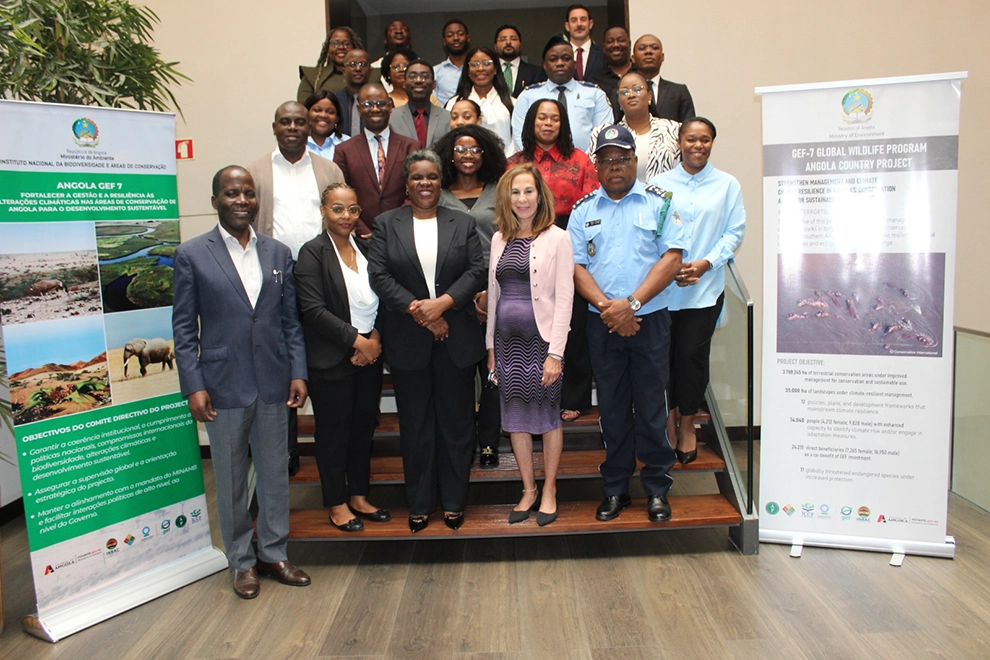
The Angola Ministry of Environment, through the National Institute for Biodiversity and Conservation Areas (INBAC), in partnership with the ICCF Group, held a Consultation Workshop on September 3, 2026, in Luanda, Angola. The meeting brought together representatives from public institutions, civil society, conservation partners, and organizations involved in investment and financing.
The event was opened by Dr. Marta Zumbo, INBAC’s Deputy General Director, and Susan Lylis, the ICCF Group’s Executive Vice President. Both underscored the value of cooperation among institutions and partners, as well as the project’s role in creating favorable conditions for conservation, sustainable development, and increased private‑sector engagement. They also emphasized the importance of ensuring that recommendations are practical and geared toward measurable outcomes.
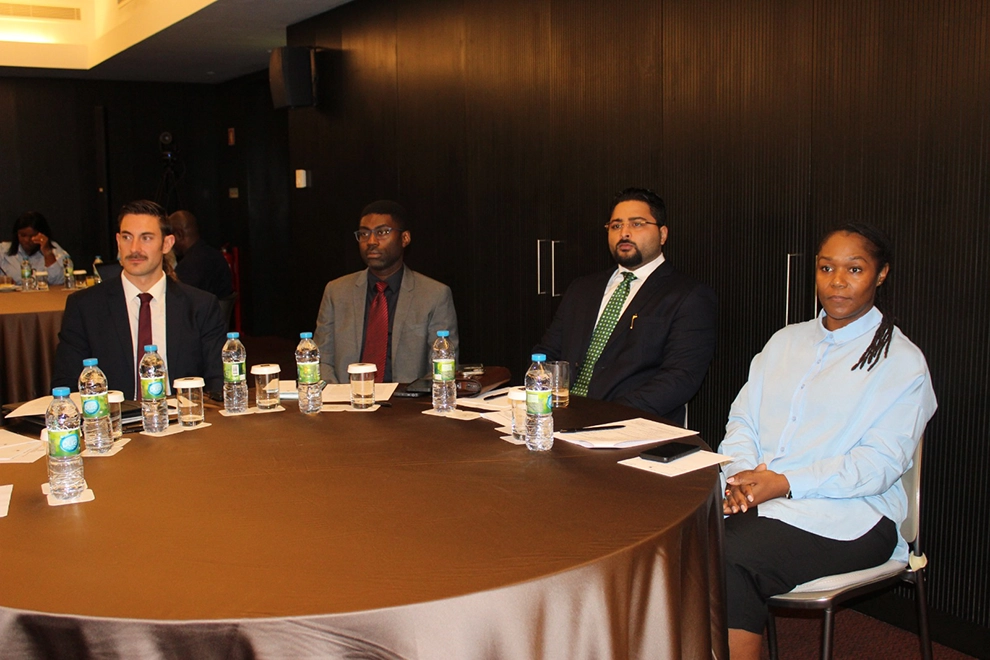
From left to right: Peter Coals, The HALO Trust; Celio Njinga, The Nature Conservancy; Eduardo Pires, The Nature Conservancy; and Paula Lopes, Legal Consultant.
The workshop’s objective was to present and discuss the Legal Framework Report, gather technical and institutional input, and identify constraints and opportunities related to Nature-Based Tourism (NBT), tourism concessions, sustainable investment, and the use of conservation areas.
Participants examined the legal and institutional framework governing biodiversity conservation, protected areas, sustainable investment, community benefits, and environmental financing in Angola. While Angola has established several relevant laws and regulations, discussions highlighted the need for greater clarity, harmonization, and effective implementation to support long‑term conservation and investment.
A central theme was the need to strengthen institutional mandates and coordination. Representatives from AIPEX, INBAC, the Forestry Development Institute (IDF), the Institute for the Supervision of Community Activities (ISAC), the General Tax Administration (AGT), the National Border Police, and The Nature Conservancy (TNC) stressed the importance of clearly defining responsibilities related to wildlife management, revenue generation, investment, and activities inside and outside protected areas. References to Law No. 6/17 of 24 January and its implementing regulations reinforced the need for consistency between legislation, institutional roles, and practical application.
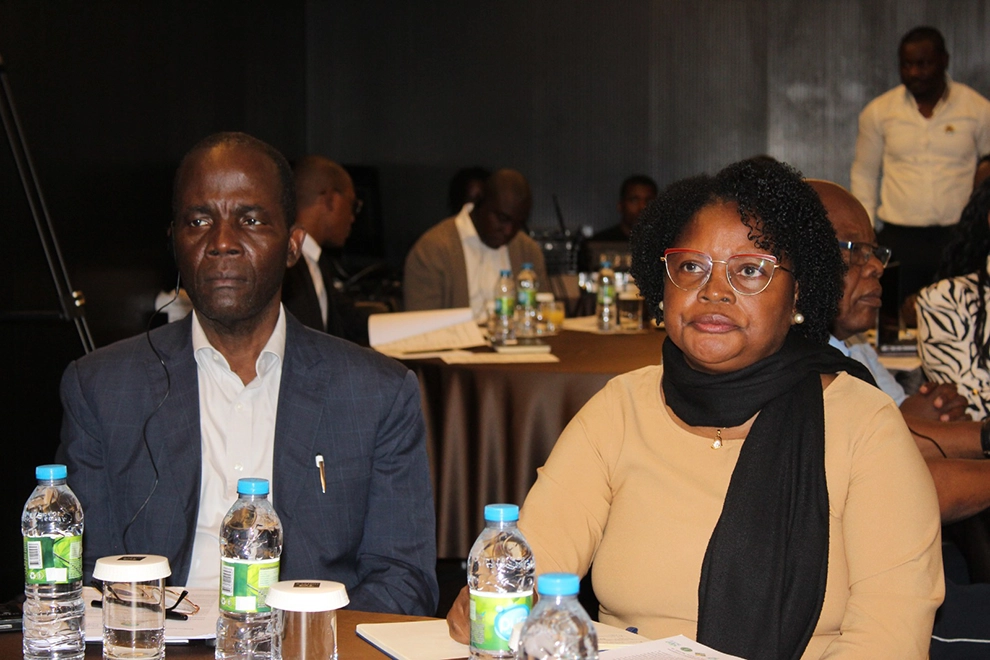
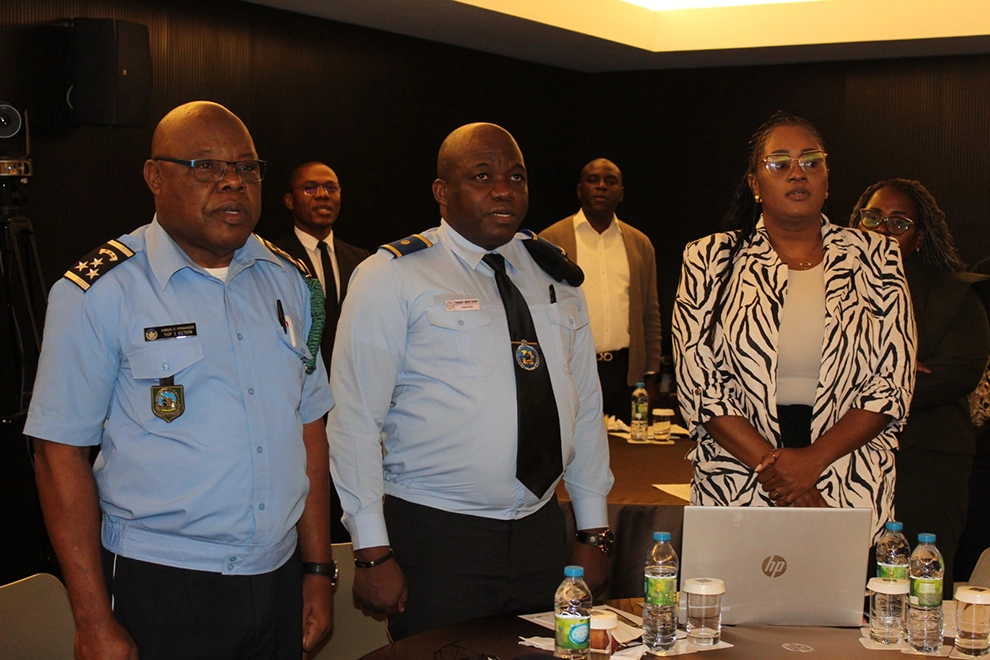
Dr. Malaquias Tenente, Focal Point for GEF in Angola, and Mrs. Helena David, Spatial and Land Registration Institute.
Revenue generation and distribution mechanisms were also identified as areas requiring further clarification. Participants raised questions about environmental charges, taxation, and how revenues should be allocated between national and local levels, including ways to ensure meaningful benefits for local communities. Some mechanisms may need additional detail through government regulations or, where appropriate, legislative action.
Fiscal and customs incentives were another key topic. Existing measures that reduce or exempt certain environmental equipment, vehicles, and renewable‑energy investments were noted, but participants emphasized the need for clearer communication, predictability, and accessibility for investors and implementing partners. A comparative review of approaches used in neighboring countries, including Namibia, was recommended.
The workshop also underscored the importance of strengthening the legal environment for private investment, concessions, and partnerships in protected areas. Investors require legal certainty, predictable procedures, and adequate security conditions, especially in remote areas. Community land rights and access to land were highlighted as essential considerations, requiring stronger cadastral systems and mechanisms to prevent and resolve land‑related conflicts.
Emerging areas such as voluntary carbon markets were recognized as needing further legal and regulatory development. Participants noted the absence of a fully defined framework and the need for clear rules governing carbon‑related activities, concessions, investment, and benefit‑sharing. Innovative financing tools, including nature bonds, were identified as promising opportunities that require appropriate legal and institutional arrangements.
Finally, participants stressed the importance of translating legal recommendations into coordinated institutional action. The proposed Interinstitutional Working Group would serve as a practical mechanism to consolidate recommendations, identify necessary legislative and regulatory measures, assign responsibilities, and monitor implementation.
Overall, the workshop confirmed that strengthening Angola’s conservation framework requires not only new or updated legislation, but also better alignment of existing rules, clearer institutional mandates, functional regulations, and stronger implementation mechanisms. Addressing these issues will be essential to creating a more predictable environment for conservation, sustainable investment, community participation, and long‑term environmental financing.
 Regional Headquarters