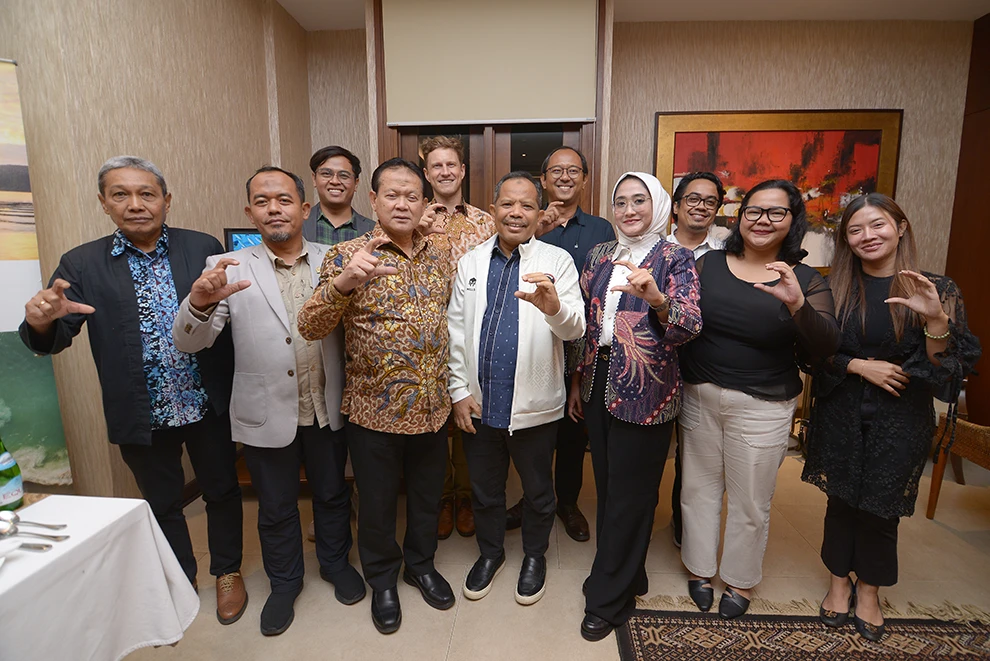
ICCF Indonesia, with support from the Blue Nature Alliance, convened a closed-door roundtable discussion on Large-Scale Marine Protected Areas (LSMPA) in Indonesia in Jakarta.
The discussion brought together members of the Conservation Caucus from Commission IV of the Indonesian House of Representatives (DPR-RI) alongside experts from Konservasi Indonesia and WWF Indonesia.
The roundtable aimed to deepen parliamentary dialogue on Indonesia’s pathway toward achieving its national marine conservation target of protecting 30 percent of its waters by 2045 (30x45), with a particular focus on governance, economic rationale, and legislative implications of developing LSMPAs in offshore waters. The discussion built on momentum from the United Nations Ocean Conference (UNOC) in Nice, France, translating earlier informal exchanges into a focused, Indonesia-centred policy dialogue.
LSMPA and Indonesia’s 30x45 Target
Viktor Nikijuluw (Senior Ocean Program Advisor, Konservasi Indonesia) opened the discussion by outlining Indonesia’s marine conservation status. While around 10 percent of national waters are currently protected, conservation efforts remain largely concentrated in coastal areas. Achieving the 30x45 target, he noted, will require expanding protection into offshore waters through the development of LSMPAs. In the Indonesian context, LSMPAs refer to large-scale conservation areas beyond 12 nautical miles, typically spanning 10 million hectares or more. Konservasi Indonesia highlighted early work under the Blue Nature Alliance, including three priority regions: West Sumatra, South Java, and the Banda Sea. The Banda Sea was cited as an example of science-based spatial management, including open–closed fishing seasons to protect tuna spawning grounds while sustaining fisheries.
Why LSMPAs Matter: Food Security, Fisheries, and Economic Value
The discussion emphasized that LSMPAs are not only about biodiversity protection, but are critical to food security and fisheries sustainability. Offshore waters serve as key spawning and nursery grounds for migratory species such as tuna, which underpin Indonesia’s protein supply and fishing economy.
Participants also referred to cost–benefit analysis presented to Commission IV, showing that well-managed marine protection can generate higher economic returns than business-as-usual. A model combining core no-take zones with sustainably managed use areas was shown to deliver net economic gains, reinforcing conservation as a strategic investment, rather than a constraint on development.
Parliamentary Reflections: Conservation as a Balanced Policy Path
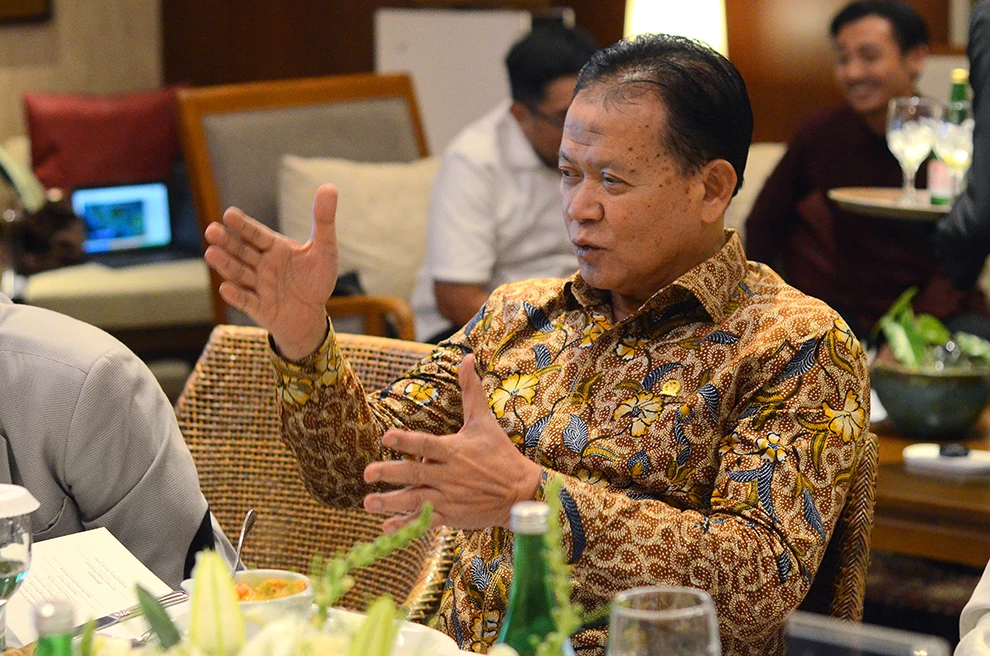
The discussion was moderated by Hon. Prof. Rokhmin Dahuri (PDI-P - West Java VIII), who framed conservation as a “middle path” in Indonesia’s development trajectory. He noted that Indonesia faces increasing pressure to generate economic growth and employment, while simultaneously confronting challenges such as overfishing, marine pollution, and ecosystem degradation. In this context, he emphasised that conservation should not be viewed as an extreme no-take zone approach, but as a balanced policy approach that allows sustainable use of marine resources within clear ecological limits.
From a parliamentary perspective, he underscored that the DPR-RI is prepared to support conservation initiatives, provided that legislators are meaningfully engaged across their core mandates of legislation, budgeting, and oversight, including through regulatory instruments below the level of national laws.

Members of Commission IV echoed this perspective while highlighting key conditions for success. Hon. Rina Sa’adah (PKB - West Java X) stressed the importance of clearly prioritising geographic focus areas over the next five to ten years to ensure a strategic and preventive approach. She also highlighted that conservation efforts must demonstrate tangible economic benefits for coastal communities, so that protection measures do not conflict with livelihoods. In this context, she reaffirmed Parliament’s readiness to support conservation initiatives, including through budgetary mechanisms.
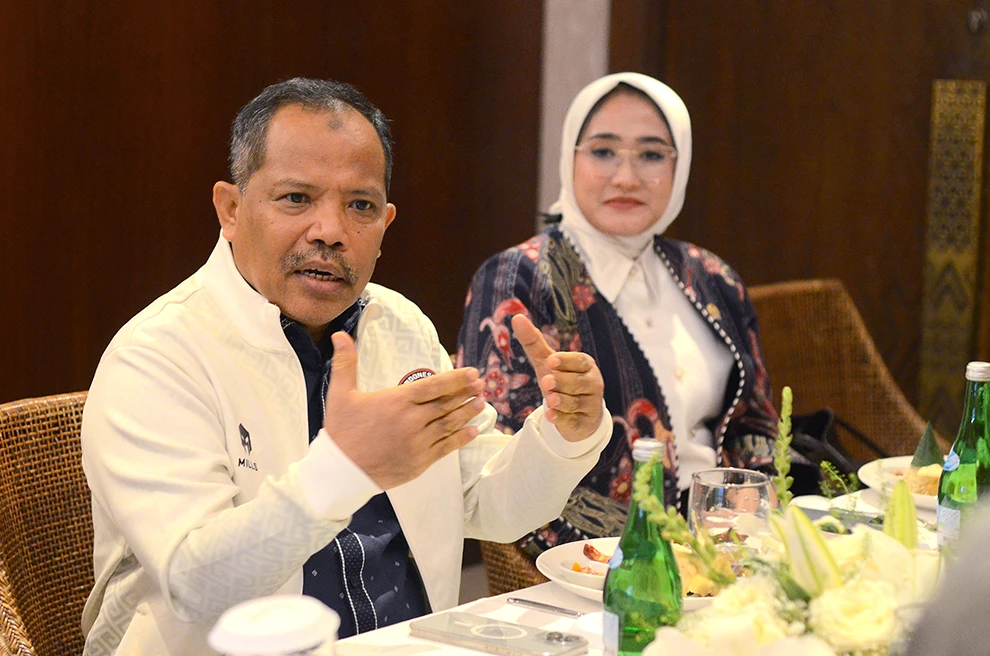
Hon. Johan Rosihan (PKS - West Nusa Tenggara I) raised concerns regarding social acceptance and legal certainty. He cautioned that conservation is often perceived as a “luxury” by fishing-dependent communities if it is seen to limit income opportunities. Without clear legal frameworks and institutional clarity, conservation policies risk generating resistance at the local level. He emphasised the need for strong legal anchors, regulatory coherence across sectors, and clear mandates for oversight, particularly given the ocean’s role as a multi-use space.

Hon. Riyono (PKS - East Java VII) highlighted the political dimensions of advancing the LSMPA agenda. He noted that sustained progress will depend on cross-party and cross-faction support within the DPR. He encouraged intensified engagement through formal hearings and targeted parliamentary briefings, and emphasised the importance of framing LSMPAs as both an environmental and an economic opportunity. In his view, positioning conservation as part of Indonesia’s broader economic transition would strengthen political buy-in and policy traction.
Regulatory Considerations and the Way Forward
The discussion highlighted the importance of regulatory clarity. While Indonesia’s 30 percent marine conservation target is already reflected in national development plans, further regulatory work is needed to operationalise LSMPAs, including the formal designation of individual areas following scientific studies and public consultations. Parliamentary support remains essential to provide legal certainty, enable budgetary allocation, and strengthen oversight.
Building on the discussion, ICCF Indonesia underscores the importance of engaging the Blue Economy Working Group under the Committee for Inter-parliamentary Cooperation (BKSAP DPR-RI)—operating within the framework of the ICCF–BKSAP MoU—as part of the LSMPA policy pathway. While Commission IV plays a central role in sectoral oversight, engagement with BKSAP is viewed as a way to strengthen policy coherence, support long-term political durability, and situate LSMPAs within Indonesia’s broader blue economy and parliamentary diplomacy agenda.
Overall, the dialogue reaffirmed that marine conservation in Indonesia is no longer solely a technical issue, but an increasingly strategic policy agenda, one that sits at the intersection of environmental stewardship, economic resilience, and parliamentary leadership.
 Regional Headquarters