The ICCF Group in East Africa held a regional closing workshop with activities designed to advance marine conservation, discuss project successes and lessons learned, and outline a path forward for sustaining the International Waters program.
The ICCF Group held a regional closing workshop for the GEF project "Facilitating Dialogue and Strengthening Transboundary Cooperation with Legislators to Improve Marine Governance" on December 16, 2025, with activities designed to advance marine conservation, discuss project successes and lessons learned, and outline a path forward for sustaining the International Waters program in East Africa.
The workshop brought together key stakeholders, including African Parks (AP), Agence Française de Développement – Mozambique (AFD Mozambique), Administração Nacional das Áreas de Conservação (ANAC), Biofund, Conservation International, the European Union (EU), Fauna & Flora International (FFI), Gorongosa Restoration Project, the Ministry of Agriculture, Environment and Fisheries, Peace Parks Foundation (PPF), Rob Walton Foundation (RWF), Safaris De Moçambique / Panyame Conservancy, SPACES / McKinsey Group, Wildlife Conservation Society (WCS), World Bank (WB), members of the Mozambican Parliamentary Conservation Forum (MPFC), members of the Parliamentary Conservation and Climate Change Caucus-Kenya (P4C-K), and virtually Kenya Wildlife Service (KWS), Kenya Marine & Fisheries Research Institute (KMFRI), and The Nature Conservancy (TNC) Tanzania.
Key Lessons Learned
Key lessons shared by the project partners and the ICCF Group included:
- Political will matters: Empowered legislators drive sustainability when equipped with knowledge, tools, and networks.
- Engagement with the Executive branch: Including ministries and agencies in legislative programs strengthens policy cohesion and impact.
- Marine issues are multisectoral: Integrated solutions are required to address challenges from maritime security to small-scale fisheries and pollution.
- Data and policy alignment: Strong evidence is necessary for effective legislation and oversight.
- Stakeholder inclusion: Open dialogue between parliamentarians, civil society, academia, and technical experts is essential, with communities remaining central to implementation.
- Parliamentary cycles: Staff turnover and legislators’ demanding schedules can affect timely implementation. Consistent communication with Parliament is necessary to maintain momentum.
- Field missions: Site visits provide parliamentarians with direct insight into the importance of strong marine governance and policy impact on the ground.
- Regional cooperation: Collaboration among East African nations is central to advancing transboundary marine governance. Aligning policies, discussing shared challenges, and capitalizing on relevant opportunities must continue for program sustainability.
Marine Conservation Context in East Africa
Participants highlighted several critical issues for marine governance moving forward:
- Coastline and transboundary management: Understanding Mozambique’s coastline boundaries and addressing transboundary issues is essential. Mozambique has clearly defined borders with Tanzania, but ongoing issues with Madagascar and South Africa pose governance and coordination challenges.
- Maritime policy and strategy: Discussions noted the challenges of disseminating and operationalizing policy instruments. While frameworks exist, limited awareness, capacity constraints, and coordination gaps hinder consistent application.
- Marine protection targets: A continental-level request has been made to extend protection from 200 to 350 nautical miles under the UN framework. Mozambique aims to protect at least 10% of its marine area and has currently achieved 12.5%, with ongoing efforts to expand protection, strengthen ecosystem resilience, and support sustainable livelihoods.
- Human Pressures and Community Engagement: Human pressures include unsustainable agricultural practices, illegal fishing, and high community dependence on marine resources. KWS and KMFRI shared that they manage some marine areas in urban jurisdictions, but communities remain central to conservation efforts. African Parks highlighted a seven-year agreement with Bazaruto to protect small fish populations and reduce community reliance on marine resources. Communities are educated that fish stocks require recovery periods. Additional pressures include limited employment opportunities from hotels and lack of awareness of alternative livelihoods. Training centers have been established to equip women with skills in food preparation and children with primary education and alternative livelihood skills.
Legislative Engagement
On December 15, 2025, the ICCF Group paid a courtesy call to Hon. Hélder Injojo, Deputy Speaker of the Parliament of Mozambique, who commended ICCF’s work and committed to continued collaboration. Discussions included the need for a Memorandum of Understanding (MoU) to define collaboration areas, roles, responsibilities, information-sharing mechanisms, and modalities for sustained engagement.
The ICCF Group also met with nine members of the parliamentary caucus, who reiterated their commitment to the ICCF Group’s work and emphasized their readiness to be equipped with knowledge and tools to advance marine conservation within their legislative roles. Katherine Brantley, Project Coordinator, briefed the members of Parliament on the International Waters project and discussed opportunities for the caucus to continue their marine agenda.
Briefing and Field Mission to Santa Maria and Inhaca Islands
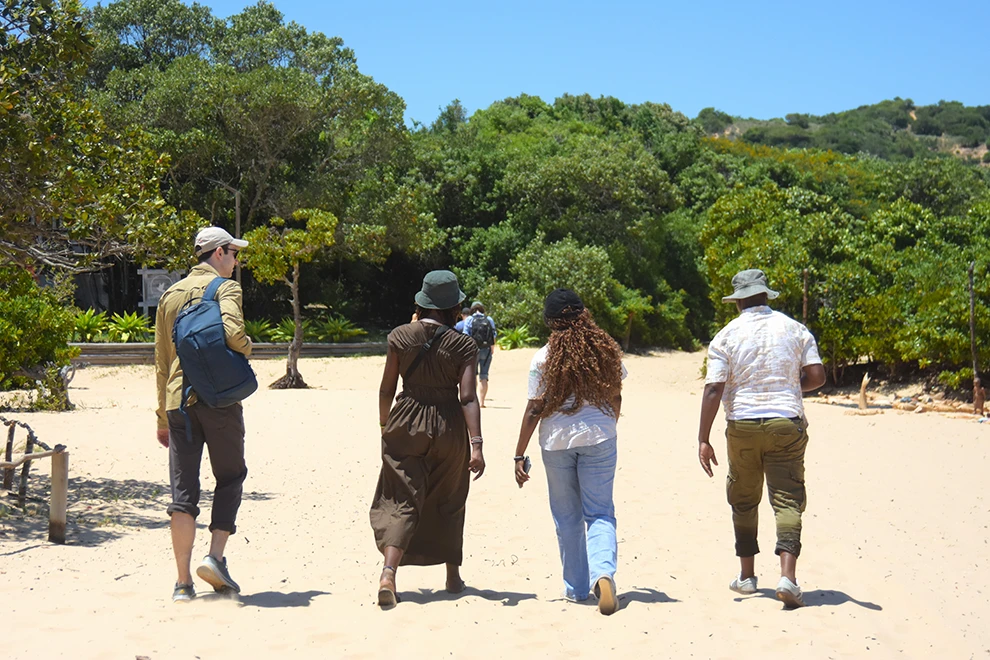
The ICCF Group brought sixteen participants, including four members of Parliament, on a field mission to Santa Maria and Inhaca Islands to observe ongoing marine conservation efforts. Peace Parks Mozambique (managing Maputo National Park and Marine Reserve) and partners provided an overview of interventions, challenges, and opportunities associated with sustaining Marine Protected Areas.
Marine Ecosystem Management
- Biodiversity: Inhaca hosts coral reefs and critical habitats for reproducing marine species, including a small population of dugong. Marine park boundaries have been redefined to better protect high-value areas.
- Monitoring: Seaweeds and mangroves are monitored with community involvement.
- Artisanal fisheries: Operations in Santa Maria and Inhaca reveal increasing community dependence on marine resources.
- Turtle monitoring: Community-led programs serve as first responders, complemented by communication campaigns to raise awareness.
Alternative Livelihoods
Peace Parks and partners support aquaculture and agricultural programs to reduce pressure on marine resources. Fisheries councils have been revitalized, with three communities formally gazetted. Resource management plans have been collaboratively developed to ensure community participation.
Mangrove Restoration
Following heat stress exposure, approximately 500 hectares of mangroves have been planted, with early indicators showing 40% regrowth. Over 50 community groups have participated, supported by energy-efficient stoves to reduce mangrove use. A marine seaweed program, implemented with EU support, strengthens community ecosystem management capacity.
Governance and Policy
Public awareness of marine conservation remains limited. Legislators highlighted gaps in enforcement, with the SPACES program support expected to strengthen legislative frameworks. Direct engagement with parliamentarians is necessary to address oversight gaps and ensure policy coherence.A key recommendation was for the caucus to organize a dedicated day for partners working on marine conservation to present their work and highlight support required from legislators. Members of Parliament also emphasized that partners should proactively communicate oversight gaps, such as MSC operations in Portuguese Island, enabling parliamentarians to summon relevant agencies and ensure accountability.
Partnerships and Capacity Building
The partnership between Peace Parks and ANAC is central to conservation. Many areas remain financially unsustainable; Peace Parks provides technical and financial support, including training rangers through the wildlife college. WCS supports six fisheries management areas with technical and financial assistance. Stakeholders emphasized the need for direct community engagement alongside senior government interactions.
Zonation and Pressures of Tourism
Tourism zoning and rising sea temperatures continue to affect coral reefs, causing degradation and species displacement. Adaptive management approaches are needed to regulate human activity and enhance ecosystem resilience.
Conclusion
The field mission and regional workshop highlighted the complex nature of marine conservation in Mozambique. Significant progress has been made in community engagement, ecosystem restoration, co-management, and legislative collaboration. Persistent challenges remain in financing, climate impacts, legislative awareness, and public engagement.
These insights underscore the importance of integrated approaches combining community-led action, strong institutional partnerships, legislative oversight, and sustained donor support to ensure the long-term sustainability of Marine Protected Areas in Mozambique.
 Regional Headquarters