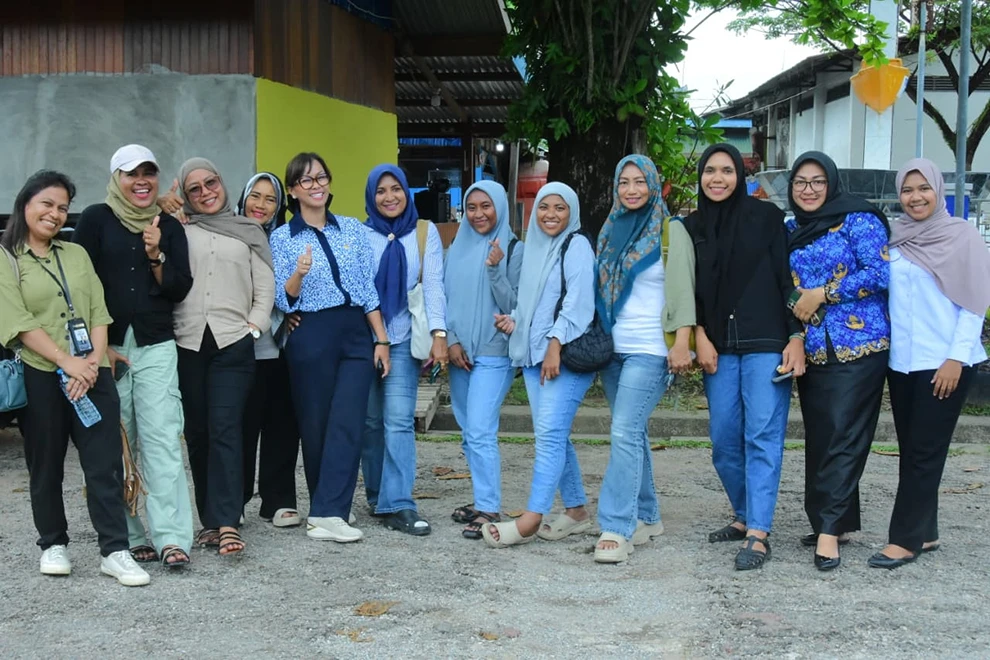
ICCF Indonesia and members of the DPR-RI’s Committee for Inter-Parliamentary Cooperation met with KOBUMI, a social-ecological enterprise pioneering inclusive, community-based fisheries and fair-trade system.
South Sorong, Southwest Papua — Continuing its engagements with coastal communities across Tanah Papua, the ICCF Indonesia delegation and members of the DPR-RI’s Committee for Inter-Parliamentary Cooperation (BKSAP Working Group on Blue Economy) met with KOBUMI, a social-ecological enterprise pioneering inclusive, community-based fisheries and fair-trade systems in Papua, Maluku, and Sulawesi.
The visit underscored how KOBUMI and its partner cooperative, Fgan Fen Sisi, are strengthening local economies, promoting sustainable harvesting, and ensuring that Indigenous communities remain central actors in managing and benefiting from their natural resources.
A Social-Eco Enterprise Built for Indigenous Prosperity
Established in 2022 with support from EcoNusa and ten community cooperatives, KOBUMI was designed to give Indigenous and local communities a stronger position in the supply chain; not as extractive labourers or raw-material suppliers, but as owners, managers, and fair recipients of value.
Through training, processing facilities, cold-chain development, and guaranteed purchase schemes, KOBUMI helps communities access wider markets while maintaining environmentally responsible practices.
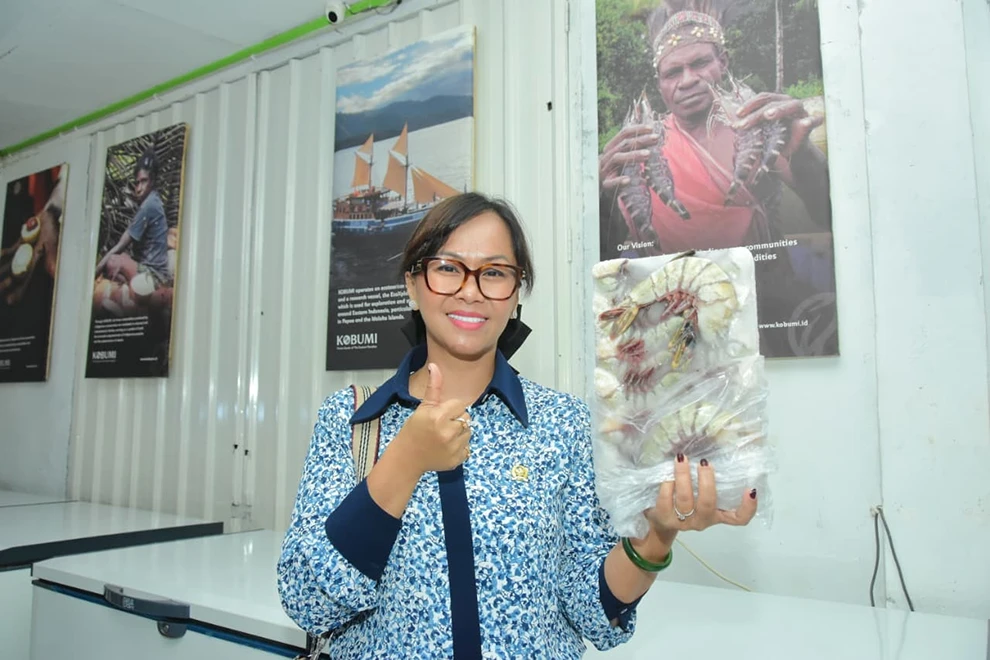
Fgan Fen Sisi Cooperative: Sustainable Shrimp and Community-Based Value Chains
One of KOBUMI’s strongest examples is the Fgan Fen Sisi Cooperative in South Sorong.
Here, coastal families harvest mangrove shrimp through small-scale, traditional techniques passed down across generations. To support better product quality and price stability, KOBUMI and EcoNusa helped establish a community-run cold storage warehouse equipped with air-blast freezer (ABF) technology.
With this infrastructure, community fishermen no longer depend on middlemen or sell at volatile “distress” prices. Instead, they are part of a value chain that is transparent, ethical, and environmentally responsible.
Parliamentary Reflections: Innovation Rooted in Local Wisdom
Following the visit, DPR-RI member Hon. Faujia Helga Tampubolon expressed appreciation for the cooperative’s innovation and its potential as a model for other Indonesian regions. As reported in the official DPR-RI release:
"The products are unique and have cultural value. This kind of social-ecological enterprise deserves wider support. It shows how local wisdom can be transformed into an economic opportunity without damaging the environment."
She highlighted that community-driven enterprises like KOBUMI contribute directly to Indonesia’s broader blue economy and sustainable development agenda.
Why KOBUMI Matters for Indonesia’s Blue Economy
The visit underscored how KOBUMI strengthens sustainable coastal economies by ensuring fair pricing, reducing dependence on middlemen, and promoting traditional, low-impact harvesting methods. With community-managed cold storage and ABF facilities, local cooperatives can access higher-value markets while minimising waste.
Path Forward: Strengthening Community-Led Blue Economy Models
The engagement with KOBUMI highlighted opportunities for future collaboration:
- Scaling cold-chain and processing infrastructure across coastal communities
- Enhancing cooperative governance, traceability, and quality standards
- Supporting regulatory frameworks that protect Indigenous and local resource rights
- Replicating the KOBUMI–Fgan Fen Sisi model across other regions of Papua and Eastern Indonesia
KOBUMI’s work shows that community-driven enterprises can advance Indonesia’s national blue economy goals while ensuring conservation, cultural heritage, and shared prosperity move forward together.
 Regional Headquarters